Drummond declares force majeure in Colombia as Glencore denies it access to coal port

US-based Drummond has declared force majeure on coal shipments from Colombia after failing to finish building a $350 million direct loading facility at its Cienaga port, on the Caribbean Sea, in time to meet new environmental standards.

Instead of using the old-fashioned two-step system, which implies loading barges at the docks to take them to the ships, coal miners are now expected to load their output directly.

But Drummond said the two-month labour strike that affected its operations last year, also delayed construction of its new port. Colombia’s second-biggest mining company now expects to have ready a conveyor system that loads ships directly by March.

Last week, Colombian authorities said Drummond could, in the meantime, export some of its coal through Puerto Nuevo port, operated by Glencore Xstrata’s (LON:GLEN) subsidiary Prodeco.

However an industry source told Reuters that Puerto Nuevo was operating at full capacity and had no room to carry coal from its rival miner.

“Whilst Drummond clearly overestimated its position as a big contributor for the Colombian arks, the decision to put a stop to the operations is an economical hara-kiri and demands a careful analysis,” says OPHIR Mining, Resources & Investment in its Monday report.

The experts add that Drummond negligence could have been managed through sanctions that didn’t imply harming the economic chain, as it is interrupting all of Drummond’s shipments, which are equivalent to a third of the total coal production in Colombia.

Over 4,000 jobs could face temporary suspension, and the government has warned Drummond that will not allow lay-offs as the company has had seven years to complete the upgrading.

Some of the world’s top mining companies have operations in Colombia, including Anglo American (LON: AAL) and BHP Billiton (ASX: BHP), which jointly own Cerrejon, the country’s largest coal producer.

Protesters claim win at NSW mine site

COAL mine protesters claim they’ve achieved their purpose following an ongoing blockade in north western NSW.

About 30 activists on Monday blockaded heavy vehicles at the Maules Creek mine site at Boggabri.

The trucks and machinery are used to build roads and a rail line at the site.

Two people attached themselves to a bulldozer via a cable.

Leard Forest Alliance spokeswoman Georgina Woods claimed one of the attached protesters had been arrested and taken away by police. Confirmation has been sought from NSW Police.

“We stopped a full day’s work so we have achieved our purpose,” Ms Woods told AAP.

Ms Woods said if the road to Whitehaven Coal’s $767 million open-cut mine is cut through the forest, animals, plants and sacred Aboriginal sites would be lost.

She said protesters would remain at the site for weeks to come.

Whitehaven Coal chief executive officer Paul Flynn said the protesters had not changed the operation.

“The protesters there today…have not given rise to any material change to our operations at all,” he told ABC Radio.

Protesters also blockaded the site in December after the Federal Court dismissed an application by the Northern Inland Council for the Environment (NICE), which had called for the approval granted by former Environment Minister Tony Burke to be overturned.

Police cut the activists free before arresting them.

Whitehaven has previously said the project would create 800-plus jobs and enjoyed support from most local residents.

QLD mining ghost towns predicted as workers on the move

A mining communities advocate has lashed out at the Queensland government, claiming a lack of support will see regional mining centres turn into “ghost towns” as workers leave to secure FIFO jobs.

Former state politician and Central Queensland Coal Communities advocate Jim Pearce claims mine workers are leaving regional towns at an alarming rate so they can be considered for work at the 100 per cent FIFO workforce at BMA’s Caval Ridge mine, Daily Mercury reported.

Pearce said the state and federal governments should “hang their heads in shame” for allowing BMA to opt for a wholly FIFO workforce at the mine and says people are leaving their homes and moving to different postcodes in the hope of securing work.

“This is the history of the industry in reverse,” he said.

“People used to move from the coast to the coal towns to have a job and a nice home and a great town to live in and now those vibrant populations will become ghost towns. Who would want to live in a community where they have a high risk of not being able to retain a job just because of the policies of the industry?”

BHP’s decision to use a 100 per cent FIFO workforce instead of hiring from inside the local Central Queensland community, enraged locals, the unions as well as the wider mining community at large early last year.

It was hoped that BHP would source the 1000 employees needed for the project from the surrounding areas of Moranbah, Dysart, Mackay and Rockhampton but instead workers will be flown in from Brisbane and Cairns.

President of the Moranbah Traders Association, Peter Finlay, has previously said local residents should have the opportunity to apply for jobs in their own community.

“It’s seven kilometres from the post office and if you want to work there you can’t have an address in Moranbah – how stupid is that?” he said.

Pearce agrees, describing BMA’s decision as “bad policy”.

“There’s a huge burden on infrastructure, roads and communities along the east coast and all this is adding to it,” he said.

“I think it’s about time the people of Queensland and people with some authority started to ask the questions why mining companies prefer to have FIFO ahead of a sustainable existing community. The reason is because they get tax concessions for constructing mining camps.”

Pearce called on the state and federal governments to take a serious look at the situation.

“Taxpayers, mining companies and the government have put a lot of money into building these mining communities; that’s why we need to use them.”

An enquiry into the effects of FIFO workforces on regional towns was released last year, making 21 recommendations including better resourcing communities under pressure from large FIFO workforces, removing tax benefits for companies using transient workforces, a study into the impact on communities and the development of a housing strategy.

Mining projects expected to reap investor rewards

BRENDAN TREMBATH: Australia’s mining industry is expected to enter a new phase this year, after more than a decade of investment and construction.

More projects are due to start operations, earning returns for their investors, but there are warnings of more job losses as completed projects require fewer workers.

Here’s business reporter Pat McGrath.

PAT MCGRATH: Today’s figures from the Bureau of Statistics reveal a slight fall in the amount of iron ore and coal exported in November.

But Richard Robinson from the economic forecaster BIS Shrapnel sees that as an aberration.

RICHARD ROBINSON: We’ve just had the investment phase, and the investment phase of the mining boom has probably hit its peak. So the production’s coming through. Now iron ore production is probably king as far as that goes. It seems to be coming through quite strongly.

PAT MCGRATH: It’s been a slightly different story for coal exports.

RICHARD ROBINSON: They’ve sort of been up and down, and a lot of the Australian producers are scratching their heads wondering whether they should try to persist and try to increase production and lower their costs, or really should they actually start cutting back production so they can get a rise in the price?

PAT MCGRATH: Regardless of minor fluctuations in price, it’s clear the value of Australian commodity exports is also increasing.

Export values for both commodities increased during November, so while iron ore and coal export volumes declined in the month, the lower Australian dollar means miners are earning more from less.

RICHARD ROBINSON: Ten per cent fall in the dollar – it’s even more than 10 per cent now, if it’s going to remain around 89 or 90 cents – that certainly helps the viability of a lot of those projects and they’ll probably continue to export, but you will still, you will see some projects that are still suffering from a dollar that’s probably still too high for them.

PAT MCGRATH: However, Richard Robinson doubts miners will hold off on production, even if the dollar remains around 90 US cents for much of this year.

As mining construction winds down, the accompanying jobs boom in Western Australia and Queensland is expected to follow.

Chris Richardson from Deloitte Access Economics sees many positives for Australia’s economy as the mining industry shifts into the production phase.

CHRIS RICHARDSON: But the real supercharger from the resources side was coming from construction rather than mining itself. That’s the bit that’s now winding down. At the moment, we’ve got massive mega mining projects still being built. Increasingly though 2014/2015, we’ll see project completions and that will weigh on the Australian economy, simply not as much mining construction.

PAT MCGRATH: Do you think there’s any room left though now for more exploration, construction and investment in the sector?

CHRIS RICHARDSON: The world still wants more minerals. You’re seeing half the world enter a smokestack phase of production that’s very mineral-hungry but demand growth simply won’t be as good in the next decade as it was in the last.

China is still very hungry for minerals, but just not, the growth won’t be to the same extent, and Australia has priced itself out of much of mining development. During the glory years, it was all about getting the stuff out of the ground, not worrying about how much it cost. Sadly, that’s left us with an overhang of costs being rather too high here.

PAT MCGRATH: Now the ultimate question remains: once we do start production, whether the demand will be there? Is there any evidence to show that demand ultimately will reach the supply that all these miners are hoping for?

CHRIS RICHARDSON: Yes. Look, it’s just a question of timing. If China has a bad year, and that is possible at some stage, then that’s quite bad news for miners, but the broad story still holds. The world is going through and industrial revolution, many poor people are becoming richer as a result of that, and Australia’s one of the very few rich nations lucky enough to be able to sell into that with its minerals and its energy.

BRENDAN TREMBATH: Chris Richardson from Deloitte Access Economics ending that report from Pat McGrath.

Nigeria govt says has no plan to privatise refineries

ABUJA – Nigeria’s President Goodluck Jonathan has no plans to privatise the country’s oil refineries, his spokesperson said on Friday, contradicting a government pledge to do so last month.

The Bureau of Public Enterprises (BPE) said late last month that Jonathan had approved a plan to sell the refineries, which have a combined capacity of 445 000 bbl/d, but run far below capacity due to decades of mismanagement in Africa’s top oil producer.

“The government has no plans to sell any of the nation’s four refineries, so it’s not true that Mr President approved the sale,” presidential spokesperson Reuben Abati said by telephone. Oil workers had threatened to strike over the plan.

Oil Minister Diezani Alison-Madueke a few weeks earlier had also suggested the government was looking into the idea, which is part of the Petroleum Industry Bill (BIP) being debated in parliament since 2012.

Abati declined to say whether Jonathan had changed his mind or whether the BPE statement had been incorrect. A BPE spokesperson declined to comment.

A government source said threats by the country’s two main oil workers’ unions to strike over the plan had persuaded the government to shelve the idea for the time being.

The white collar Petroleum and Natural Gas Senior Staff Association of Nigeria (PENGASSAN), with 15 000 members, and the blue collar National Union of Petroleum and Natural Gas Workers (NUPENG), with twice as many, had both threatened to call strikes unless the government withdrew the plan.

A strike would have had little impact on upstream oil production, but there were fears of fuel shortages – a common problem anyway in Nigeria – that sparked some panic buying.

Selling off the refineries is one of a range of planned economic reforms that have stalled, with the exception of power privatisation and some agricultural sector reforms.

Despite pumping two-million barrels of crude a day, Nigeria relies on imports for 80% of its fuel needs. Fixing its refineries – two in the main oil city of Port Harcourt, one in Warri in the south of the country and another in Kaduna, in the north, would lift growth beyond its current 7%, economists say.

Several multi-million dollar maintenance contracts for Nigeria’s refineries have been handed out over the last decade without much impact on their performance.

‘Midas touch’ bacteria, gold roller coaster and risky countries among top stories of 2013

This year will go down as the one when gold stop glittering and miners faced increasing financial and political challenges that forced them to tighten their belts and deal with a cycle that turned against them. While most eyes were on gold prices and massive write-downs, our readers also found the following stories worth reading:

1.- Bacteria with superpowers

Canadian scientist at McMaster University, in Ontario, identified bacteria able to turn toxic water-soluble gold into microscopic nuggets of the solid precious metal. The piece was our number one by far, with almost 36,000 visits, around 1,400 Facebook recommendations and over 50 Tweets.Midas touch bacteria

 2.- American CEO’s “love letter” to French minister

While not 100% mining-related, this story attracted quite a few visitors.  After all, not everyday you get to read a letter by a businessman asking a French minister “how stupid” he thought Americans were. Too bad we never saw the reply. Over 26,000 people read this story, 300 shared it in Facebook and over a dozen in Tweeter.

3.- World’s top 10 gold deposits

One of our knowledgeable contributors took the third spot with this story, pulling in close to 26,000 visits, over 110 likes in Facebook and dozens of tweets.

4.- How and why the gold crash was inevitable

With a headline like that, no wonder this concise explanation of one of this year’s most followed commodities behaviour was read by more than 25,200 people.

5.- $195 billion in metal and fuel flying past the earth

An asteroid that flew past our planet in February it said to have contained up to $195 billion of easy-to-recover iron, nickel and other metals. The company that triggered the alert also said it planned to send a fleet of asteroid-prospecting spacecraft out into the solar system to hunt for resources.

6.- Death of mining executives in Mexico

What it first looked like the recovery of two bodies belonging to top managers at US-based exploration firm Southridge Minerals (PINKSHEETS: SRGE), turned out to be a scam by a firm with a known crooked past.

Nearly 21,000 read the stories, which also generated quite the discussion in a known investors forum.

7.- Not that rich any longer, but never forgotten: this year mining billionaires

Presented in a unique slideshow format, this piece grabbed the interest of more than 18,000 readers and was amply shared in social networks.

8.- Gold production costs around the globe

During the worst year for gold in over three decades, these kinds of stories sold like hot cakes. This infographic analysed cash costs per ounce for the world’s top 50 producing gold mines.

9. Why mining investors should stay way from these countries

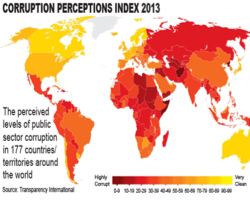
A report on Transparency International’s annual corruption perceptions index, published early this month, became a top-seller rather quickly. Almost 15,000 readers learned how corrupted governments can be equally or more detrimental to the industry than resource nationalism.

10.- Our loyal science lovers treasured this brief note about Canadian geoscientists who found the oldest water on Earth in underground mine.14,500 plus read this piece, and almost 400 shared it in Facebook.

We want to hear which one was your favourite story this year…Please share your thoughts in the comments section.

360° Mining

This post was brought to you by 360° Mining —a one of a kind mining course to teach you what is current, topical and important in today’s mining scene.

The gold rush is over: 2013 the worst in 32 years

Gold held steady in thin year-end trade on Tuesday, inevitably heading for its first annual price decline since 2000 and the biggest in 32 years, signalling what some say is the end of the gold rush that saw the price surge six-fold and an unprecedented mining super-cycle.

Bullion futures, which rebounded after reaching a six-month low today, traded 0.6% higher at $1,211.30 an ounce at 10:30 am ET on the Comex in New York, after hitting a scary $1,181.40, the lowest since June 28.

Spot gold was up a mere 0.1% at $1,197.66 an ounce at 8:05 am ET.

The precious metal fell out of favour with institutional and retail investors since they braced for the US Federal Reserve to cut its monthly $85 billion bond-buying scheme, moving funds to equities and other riskier assets.

Investors discarded as much gold from exchange-traded products in 2013 as had been purchased in the previous three years. According to data compiled by Bloomberg, they sold 789.3 metric tons since the start of January, pushing holdings to the lowest level since March 2010 and wiping $67.5 billion from the value of the funds.

As a consequence of this year weak prices, analysts say gold miners will likely announce a series of fresh write-downs in 2014.

Mining: our love and fear

To a large extent, mining has made the Australian nation, but while aware of its importance many Australians are uncertain or hesitant about its respectability as an industry. ‘Boom’illustrates and helps explain this ambivalence. The book, written by Malcolm Knox, sets out to test the hypotheses that mining is integral to Australians’ perception of themselves and that mining is part of the Australian cultural DNA.

The author argues that this may explain the almost inexplicable support that the mining industry received from the Australian public in its successful bid in 2010 to avoid the implementation of a ‘Resource Super Profits Tax, a tax designed to spread the benefits of the recent mining boom to this same public.

Knox argues that this may explain the almost inexplicable support that the mining industry received from the Australian public in its successful bid in 2010 to avoid the implementation of a Resource Super Profits Tax, a tax designed to spread the benefits of the recent mining boom to this same public.

Knox gives a good overview of the key historical events in mineral discovery and development of the mining industry in Australia from “gold rush to GFC”. It is a highly readable and insightful account that explores some of the fascinating dramas and characters that litter our prospecting and mining heritage.

The author presents his history under chapter topics covering ‘Finding’ (mineral discovery), ‘Peopling’ (immigration and settlement), ‘Nation Building’ (economic development), ‘Buying and Selling’ (the financial aspects), ‘Surviving’ (impacts on the miners), ‘Working’ and ‘Trading Off’.

In the last chapter entitled ‘Booming’ he revisits these key topics through the most recent mining booms from the 1960s to the current China led commodity bonanza and notes some interesting comparisons and contrasts with the earlier cycles of mining activity.

An interesting proposition in the chapter called ‘Finding’ is that Australian mining history lacks real heroes and instead is populated by lucky prospectors, nearly men, wheeler dealers and frauds. This seems an exaggeration, but may highlight a lack of knowledge by recent generations, not assisted by the anti-mining lobby and abysmal promotion by the mining industry of its own history.

The chapter on ‘Peopling’ importantly reminds us that mining dramatically populated Australia. Knox shows how the pattern and timing of mineral discoveries had important social, political as well as economic implications. He also highlights the contribution of Chinese gold miners and the beginnings of racial discrimination that led to the ‘white Australia policy’.

In ‘Nation Building’ there is some preoccupation with the inherent temporary nature of mines and resulting ghost towns. The author seems to suggest that mining is the cause of all population decline in regional Australia, but the crumbling ruins north of Goyder’s Line, the disappearing rural towns of agricultural Australia and even some of the stagnating industrial suburbs of our major cities, such as Elizabeth, north of Adelaide, suggest otherwise. However, Knox points out that despite this temporariness, much of the basic infrastructure of regional Australia and some major inland towns are continuing legacies of mining, although he questions whether modern mining will provide a similar legacy. ‘Buying and Selling’ outlines the financial history of mining, including the share market booms and busts that have captivated Australians, fleeced the greedy and gullible and stimulated discovery and ultimately production.

The author also explores the periodic Australian fear of an over-dependence on primary exports and the nation’s sputtering efforts to develop value adding. The chapter on ‘Surviving’ examines the human cost of mining as counted in deaths, injuries, and disablement and then poses the imponderable question of whether the benefits of mining outweigh the costs to miners, particularly for an example like the Wittenoom asbestos mine. In ‘Working’, Knox looks at the heritage of trade unionism in mining, suggesting that working miners are more philosophically aligned with the bosses possibly due to a capitalistic streak inherited from the early gold and copper miners. I have to say that this is not particularly convincing.

The negative environmental impacts of mining, some of the safety disasters and the relationship between mining and indigenous Australians are covered in ‘Trading Off’. Although metal mining is the focus of the book there is some coverage of coal, oil, natural gas and coal seam gas. Current controversies related to the extraction of these commodities feature in the final chapter, together with some of the social concerns related to mining development and employment practices, such as fly-in-fly-out.

Throughout the book the author has included some exuberant overstatements and mythological anecdotes, almost on par with the exaggerated claims of some of the mining shysters he describes. These add colour for the general reader, who hopefully won’t believe them all. I particularly enjoyed the highly improbable story of Paddy Hannan, while discovering gold, being mistaken for an emu and nearly shot for dinner by another mysterious prospector.

The book would have benefited from more careful editing as there are some clanging errors related to units of measurement and geographical locations. For example, readers will be astounded to see that in 1902, Western Australia produced 62 million tonnes of gold, more than 354 times the total gold production in human history, and that during 1969 the price of nickel rose from £1500 to £7000 per ounce! Paddy Hannan’s gold discovery at Kalgoorlie was near Mount Charlotte, north of the famous Golden Mile, not to the south. Lake Cowal is in central NSW, not Western Australia. The author also has John Forest, Premier of Western Australia, travelling from Perth to Canberra at the time of construction of the famous Mundaring to Kalgoorlie water pipeline, more than a decade before Canberra existed. Some common misconceptions are also reinforced, such as the belief that arsenic is used as a chemical agent to refine ores, particularly of gold. There is significant rambling repetition that would also have been picked up by careful editing.

Despite some imperfections ‘Boom’ makes an interesting and valuable assessment of the role of mining in the development of Australia and explains how the average Australian views the mining industry – most likely, as the author suggests, as a distant, shady and sometimes colourful relation who remits funds back to the extended family to keep it alive and happy.

Polyus delays commissioning of Natalka – to be Russia’s largest gold mine

Polyus Gold International, the largest gold producer in Russia, has decided, in light of the challenging market conditions, to re-sequence the development of the Natalka project (to be Russia’s largest gold mine) and delay the launch of the plant to summer 2015 from the previously announced target of summer 2014. Although it is operationally possible to commence gold production at the Natalka mine as previously planned, Polyus Gold deems it prudent to postpone its commissioning given the recent substantial decline in the gold price and the possibility of further weakness. The decision to extend the construction schedule will, therefore, enable Polyus Gold to better balance the capital requirements of Natalka with the need to maintain a sound balance sheet and robust funding position in the uncertain macro environment. Further to a deferral of the project’s residual capex, the re-sequencing will allow the company to identify additional cost and operational efficiencies, including the optimisation of capital and operating expenditures, improvements to the project design and the potential implementation of the photo metric separation technology (optical sorting) as a way to pre-enrich the ore.

Polyus Gold expects to finalise a detailed plan of improvements to the project by the middle of 2014 following a thorough project assessment review scheduled for H1 2014. In the meantime, construction works onsite will continue, albeit at a slower pace as compared to previously planned. Mining works which actively commenced in 2013 in accordance with the license terms will also continue.

Pavel Grachev, Interim Chief Executive Officer of Polyus Gold: “Polyus Gold remains fully committed to bringing Natalka on stream. Once in operation, it will be Russia’s largest gold mine with its first stage producing an average of 500,000 oz/y of gold. The gold mining sector has to adapt to a tough business environment today, with the gold price decrease of 30% over the last 12 months to the level of $1,200/oz. Moreover, there is a possibility of further decline. In light of these challenges, we will advance the project in a prudent manner so as to benefit from an extended construction schedule and seize every opportunity to improve the project’s economics to ensure maximum returns to all our stakeholders, including shareholders, authorities and local communities.”

Natalka has the potential to eventually reach an annual output of 1.5 Moz. It is located about 400 km from the sea port of Magadan in the Far East of Russia, Natalka is one of the largest known undeveloped gold deposits in the world. The mine is expected to have a processing capacity of 10 Mt/y of ore at the launch of its operations. Following a stage by stage increase of the mill throughput to 40 Mt of ore annually (conventional shovel-and-truck open-pit operation).

Gold reserves (Proven and Probable) amount to 31.6 Moz and resources (Measured, Indicated and Inferred) are estimated at 59.7 Moz.

Expect more write-downs coming soon to a gold miner near you

Gold mining companies big and small are not looking forward to 2014, as most of them already know their situation is about to get worse.

Bullion prices have plunged almost a third this year, stopping a 12-year run of gains. The precious metal fell out of favour with institutional and retail investors since they braced for the US Federal Reserve to cut its monthly $85 billion bond-buying scheme, moving funds to equities and other riskier assets.

The sector, analysts agree, is likely to announce a series of fresh write-downs, mainly triggered by the need to re-evaluate the worth of their reserves, based on a market price that is $500 an ounce less than only a year ago.

But while this year’s write-downs have been mostly tied to the costs of projects, in 2014 gold miners will have to cut their land holdings value as well as the amount of precious metal they hope is in the ground, Jorge Beristain, an analyst with Deutsche Bank, told FT.com (subs. required).

World’s No. 1 producer Barrick (TSX, NYSE: ABX) is one of the top candidates for new write-offs. After a second-quarter loss of $8.6 billion and project devaluated more than $13 billion so far in 2013, Barrick’s stock is trading around the $19 mark, making it one of the worst performers in the sector this year. The company has slashed its dividend by 75% and has vowed to cut costs by selling non-core assets and reducing its workforce.

The Toronto-based company valued its gold reserves at $1,700 an ounce at the beginning of 2013, and has since lessened its price estimate to $1,250 an ounce.

Industry’s second-largest gold miner Newmont Mining (NYSE:NEM), based its statements on a $1,400 per ounce price, said early in the year that a $100 fall in the gold price would cut reserves by 7.6%

Goldcorp Inc. (NYSE: GG) stock is down about 41% since the beginning of 2013, diving deeper since July, when it logged a net loss of about $2 billion.

Australia’s top gold producer, Newcrest Mining (ASX:NCM), (TSX:NM) also had a difficult year, reporting this summer its biggest loss ever, which pushed total write-downs to $5.73 billion.

Even before the gold price debacle began this year, bullion producers were facing challenges. As a PwC report shows, from the 40 main mining groups by market capitalization, four of the five that lost most value in 2012 were indeed gold producers – Barrick Gold, AngloGold Ashanti, Goldcorp, and Newmont Mining.